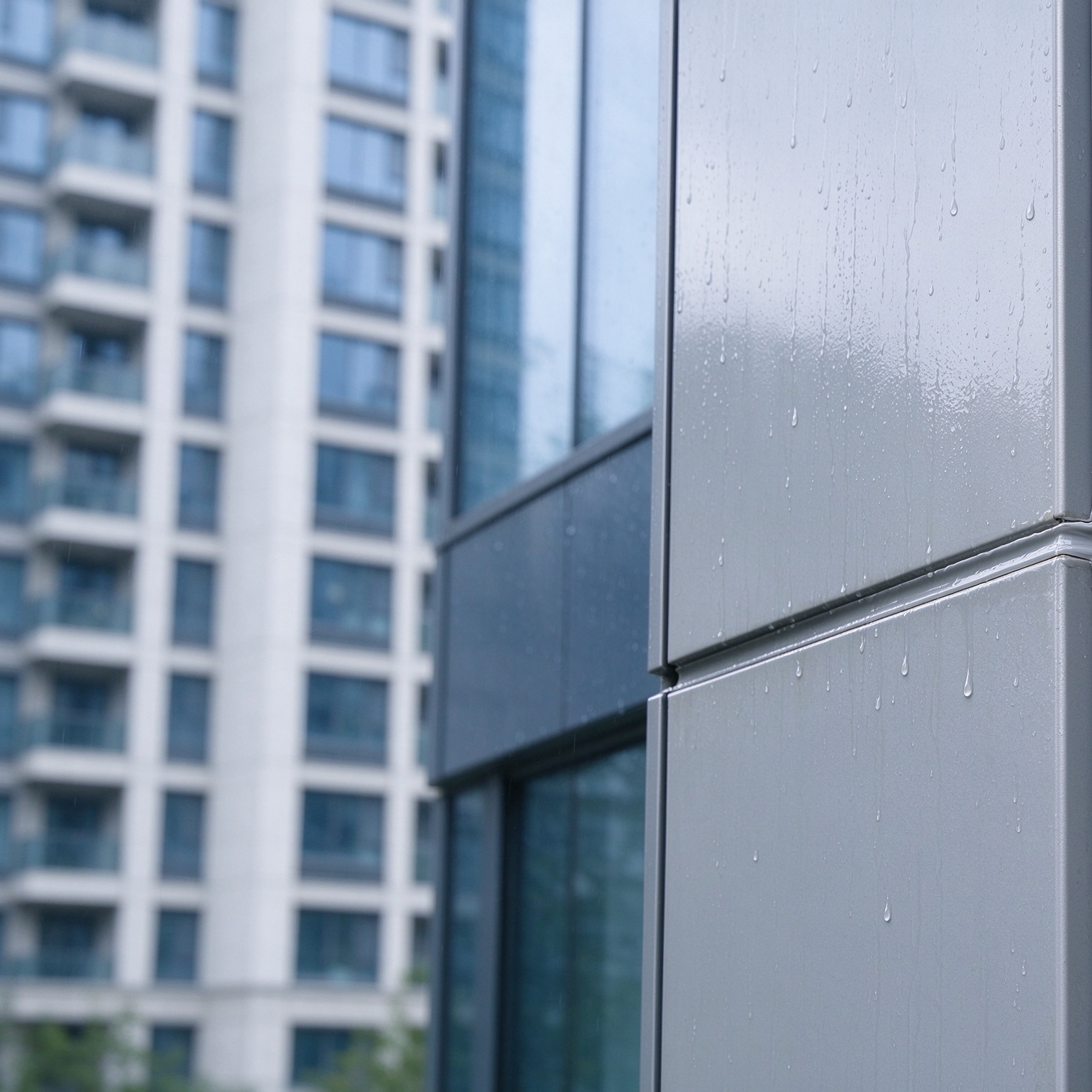







Over the past decades, glass curtain walls have become a common feature of modern cities. These iconic facades beautify urban landscapes, yet hidden safety risks have gradually come to light. While many high-altitude operation accidents are triggered by severe weather, safety failures also frequently occur during the secondary maintenance of countless building curtain walls.
For the whole industry, more challenges need to be addressed. Beyond the initial construction investment, full-lifecycle management after curtain wall installation must be taken into consideration. How to reduce curtain wall contamination, extend the service life and safety of doors, windows and curtain walls, cut secondary maintenance expenses while guaranteeing urban public safety? This has become an urgent problem for the curtain wall sector.
Small material, big impact. As the core sealing and bonding material for building doors, windows and curtain walls, sealant accounts for only a small share of the total construction cost. However, it exerts decisive influence on the long-term safety of building envelopes. Once sealing fails, it not only ruins the building appearance, but also triggers hazards such as panel falling off, bringing massive maintenance costs and property losses for owners, along with serious public safety risks. Among defective products, oil-extended sealant is the main culprit for sealant failure. It has long been criticized by industry experts and end users. Manufacturers add large amounts of cheap industrial white oil to replace expensive silicone base polymer. Such products may look fine at the beginning, but after several years of service, problems including cracking, water leakage, chalking and debonding will emerge one after another, leaving persistent hidden dangers for buildings and cities.
Cracking, Leaking, Degumming
Premium silicone sealants have silicone base polymer making up over 75% of total material cost. To cut production costs, some manufacturers sacrifice product performance by adding large quantities of low-cost mineral oil to reduce the proportion of silicone base polymer. This kind of oil-extended sealant performs well in the early stage. But with long-term exposure, the added white oil will migrate and seep out, eventually making the sealant hard, brittle, cracked and lose bonding capacity.
Contaminate bonding substrate
Curtain wall and window contamination can be classified roughly into vertical flow pollution and penetration pollution. Vertical flow pollution is mostly formed by rain washing dust accumulated on the sealant surface, which can be cleaned with relative ease. By contrast, penetration pollution caused by oil-extended sealant is completely different. It cannot be removed by conventional cleaning, heavily damaging the building aesthetics. In extreme cases, full replacement of curtain wall panels is required, which leads to extremely high maintenance expenditure.
Insulating glass failure
When oil-filled silicone weatherproof sealant stays in long-term contact with insulated glass, the added industrial white oil will gradually migrate and permeate into the insulated glass unit. It dissolves the butyl sealant of insulating glass, resulting in oil bleeding and rainbow discoloration. This destroys the original functions of insulated glass, including energy saving, anti-fogging, light transmission and thermal insulation.
With the fluctuation of global raw material prices and fierce market competition, some brands have started to compromise on quality: oil-filled sealants for doors & windows, oil-extended weatherproof sealant, hollow sealant with reduced solid content. By cutting corners and lowering quality, door, window and curtain wall projects are buried with potential safety hazards and higher long-term costs. Countless practical cases remind industry practitioners: cutting corners violates the basic economic rule, and "cheap goods bring big troubles".
In this context, how can we select reliable high-quality sealant?
Choose LECHAO!
For many years, LECHAO has adhered to the business philosophy of customer-orientation, quality priority and service focus. We strictly control every production process to deliver stable, high-performance sealant products. As a professional manufacturer of silicone sealants, LECHAO solemnly promises: none of our sealant products will be added with mineral oil or inferior fillers that degrade performance, to guarantee consistent product quality.
To sum up
Choosing LECHAO means choosing reliable quality. Amid drastic price swings of bulk raw materials like glass, aluminum and silicone, it is particularly important to select an honest supplier with stable, high-quality supply chain. Sealant itself occupies a tiny proportion of total curtain wall material cost. Picking premium sealing materials helps achieve longer service life, better project reputation, and meanwhile reduce rework, repair and later maintenance costs.